OUR BLOG
What Is Paint Protection Film and How Does It Actually Work?
Most drivers in Burlington, KY, who search for what is paint protection film want a clear explanation of how this material protects vehicle paint. Paint protection film, commonly called PPF, is a transparent polyurethane film applied to painted surfaces to help reduce damage from road debris, light scratches, stains, and environmental exposure. Its value comes from more than simply covering the paint. The film combines flexible material, pressure-sensitive adhesive, impact absorption, and a self-healing topcoat to create a physical barrier over the finish.
At Top Shine Detailing, professional PPF installation is built around careful surface preparation and precise application. Understanding the science behind the film can help Burlington vehicle owners see how it differs from wax, paint sealant, and ceramic coating.
The Material Science Behind Urethane Film
Paint protection film is engineered to remain flexible, clear, and durable while exposed to temperature changes, sunlight, road contamination, and physical contact. Its performance starts with the polyurethane material used to create the main body of the film.
Many modern premium PPF products use UV-stable polyurethane formulations designed to resist discoloration and maintain clarity during outdoor exposure. Unlike rigid plastics, polyurethane can stretch and return toward its original shape. This allows the film to conform to vehicle panels while helping absorb energy from small stones, road debris, and light contact.
How the Layers of PPF Work Together
Paint protection film is usually made from several engineered layers, each serving a specific purpose.
The outer layer is a transparent topcoat that helps resist staining, oxidation, chemical exposure, and minor abrasion. Beneath it is the polyurethane layer, which gives the film flexibility, thickness, and impact absorption. Below the polyurethane is a pressure-sensitive adhesive that secures the film to the vehicle’s clear coat. A removable liner protects the adhesive before installation.
The quality of these layers can influence clarity, durability, stain resistance, and long-term appearance. Proper installation is equally important because even high-quality film may not perform as intended when applied over contamination or installed with poor edge control.
Why Molecular Flexibility Matters
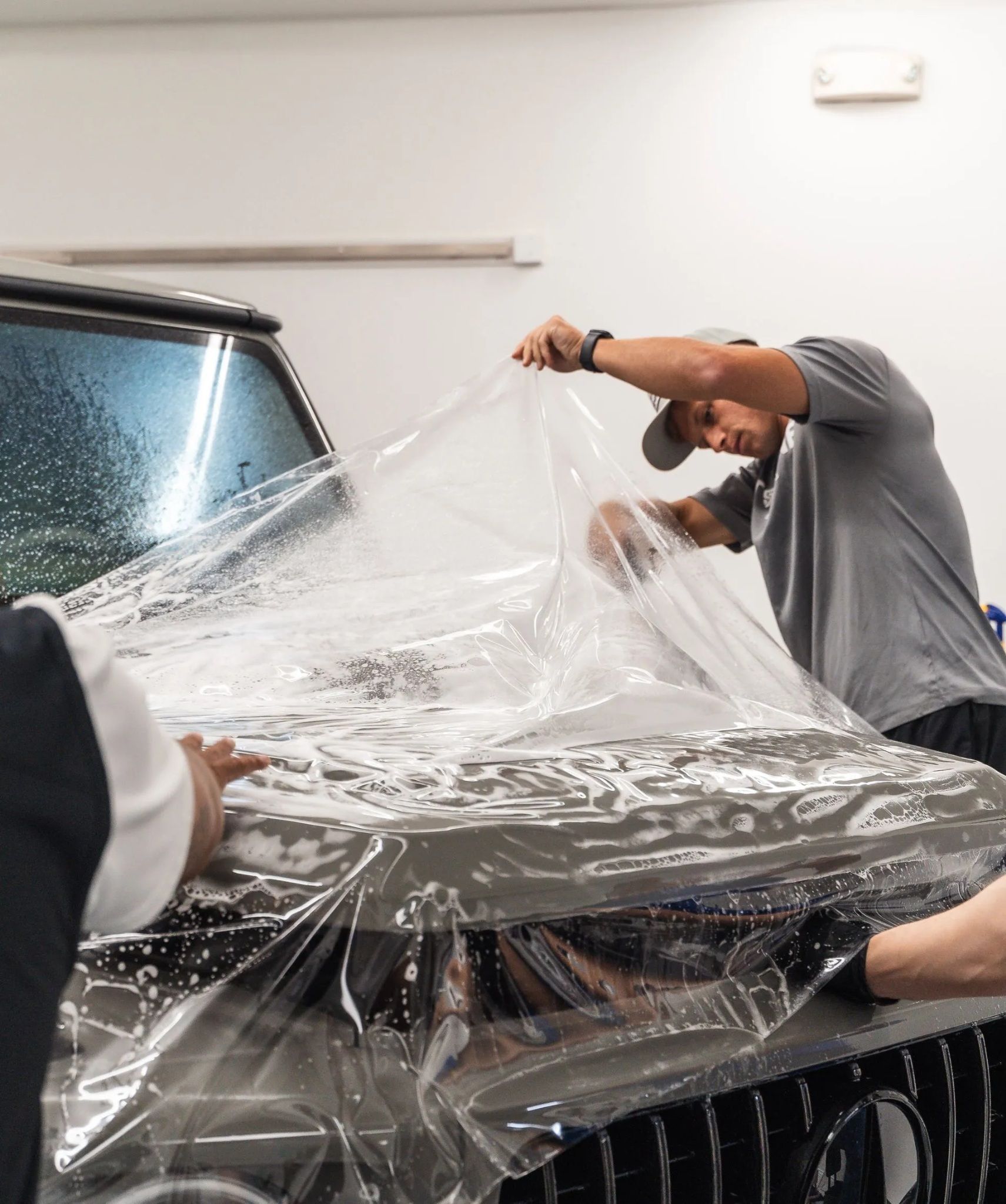
The polymer structure inside the polyurethane allows the material to bend and stretch without becoming brittle under normal conditions. This flexibility helps installers shape the film around curved hoods, bumpers, mirrors, fenders, and other detailed panels.
Instead of sitting rigidly on the vehicle, the film follows the panel’s contours. This supports a smooth, nearly invisible finish when the surface is prepared and the film is accurately positioned. The same flexibility helps the material distribute some of the energy caused by small road impacts.
How Paint Protection Film Bonds to Vehicle Paint
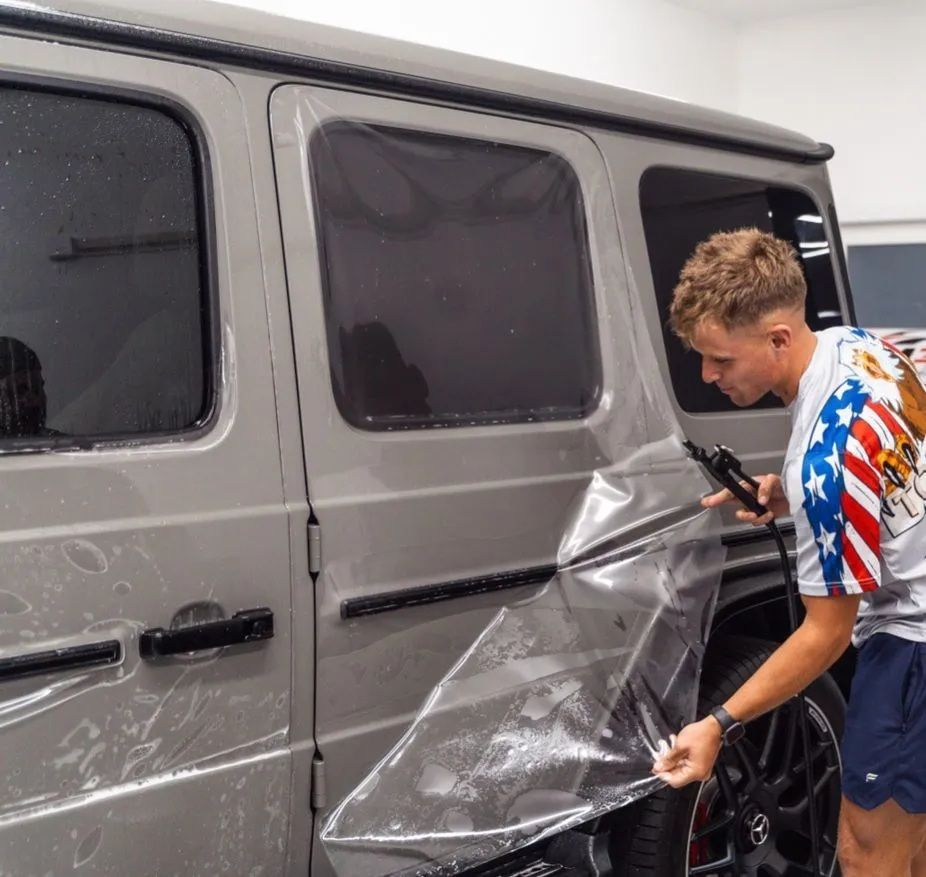
Once placed on the vehicle, the adhesive system creates a secure bond with the factory clear coat. This process differs from traditional liquid glue and depends on surface condition, pressure, and installation technique.
Most automotive PPF uses a pressure-sensitive acrylic adhesive. It develops contact with the clear coat as the film is positioned and pressed into place. The adhesive is designed to hold firmly while allowing professional removal later when performed correctly and when the underlying paint is in suitable condition.
Why Surface Preparation Is Essential
The adhesive needs a clean, stable, and properly cured surface to form an even bond. Wax, oil, dirt, bonded contamination, polish residue, or moisture can interfere with adhesion and contribute to lifting, bubbles, or an uneven appearance.
Professional installation therefore begins with careful washing and decontamination. Paint correction may also be recommended if visible defects would remain noticeable beneath the transparent film. Top Shine Detailing prepares the exterior before application so the film can sit cleanly against the paint.
Preparation also allows the installer to inspect the surface. Freshly repainted panels, damaged clear coat, or poorly bonded paint may require additional evaluation before installation.
Adhesion Build and Initial Drying
Paint protection film does not always reach its final adhesion immediately. During the initial period, the adhesive continues to build strength while moisture from the installation process gradually dissipates.
Drying time varies with the film, temperature, humidity, and application conditions. Small moisture pockets or slight haze may reduce as the film settles. Owners should follow the installer’s aftercare guidance and avoid washing the vehicle until the recommended waiting period has passed.
How Self-Healing Technology Works
One of the most recognized features of modern PPF is its ability to reduce the appearance of light surface marks. This effect comes from the elastomeric properties of the topcoat.
When the topcoat is warmed by sunlight, warm water, or controlled professional treatment, molecular movement within the material increases. This allows shallow surface distortions to relax toward their original form. Light swirls, minor marring, and fine scratches may therefore become less visible without polishing the vehicle’s factory paint.
What Self-Healing Can and Cannot Repair
Self-healing technology works only within the limits of the film. It can help reduce light marks that remain within the topcoat, including fine wash swirls and shallow scuffs.
It cannot repair deep cuts, punctures, torn edges, severe abrasions, or damage that passes through the full thickness of the film. If a section is heavily damaged, that piece may need replacement. PPF acts as a sacrificial layer, meaning the film may take damage that could otherwise reach the clear coat and paint.
How PPF Differs From Wax and Paint Sealant
Wax and paint sealant can improve gloss and provide temporary surface protection, but they do not function like PPF because they do not create a thick physical barrier.
Wax sits on the clear coat and can improve shine while offering limited resistance to water and contamination. Paint sealants generally last longer than traditional wax, although durability varies by product, maintenance, climate, and washing method.
Both gradually wear away and require reapplication. They may help reduce contamination by bonding directly to the paint, but they do not provide the thickness, elasticity, or impact absorption needed to protect against rock chips and abrasion.
How PPF Differs From Ceramic Coating
Ceramic coating creates a thin protective layer over paint using silicon-based or similar coating chemistry. It can improve gloss, increase water repellency, and make routine cleaning easier by helping dirt and contaminants release more readily.
However, ceramic coating does not provide the same physical thickness or impact absorption as PPF. It should not be expected to prevent rock chips or absorb road-debris impacts. Its main benefits are gloss, hydrophobic performance, chemical resistance, and easier maintenance.
The two services can complement each other. A professional Paint Protection Film service may be used on high-impact areas such as the hood, bumper, fenders, mirrors, and door edges, while ceramic coating may enhance gloss and water behavior on protected and unprotected surfaces. Top Shine Detailing offers both options, allowing Burlington vehicle owners to discuss an approach based on driving habits, coverage preferences, and maintenance goals.
What Paint Protection Film Means for Your Vehicle
Understanding what paint protection film is helps explain why installation quality matters as much as the material. PPF relies on engineered layers, flexible polyurethane, pressure-sensitive adhesive, and a self-healing topcoat. Each part affects how the film looks, bonds, and performs.
Proper preparation helps the adhesive form consistent contact with the clear coat. Accurate positioning helps reduce visible seams and lifted edges.
Appropriate aftercare allows the film to settle, while ongoing maintenance helps preserve clarity and reduce unnecessary wear.
For drivers in Burlington, KY, PPF can be a practical option for protecting high-impact panels or providing broader vehicle coverage. The right choice depends on the vehicle, driving conditions, budget, and desired level of protection.
Top Shine Detailing provides professional paint protection film services focused on careful preparation and a clean, consistent application.
Contact us today to discuss your paint protection goals and explore the coverage options available for your vehicle.